
REGISTRATION NOW OPEN!
RELAX & RESTORE AT THE RANCH
May 15, 2026 • Woodside Ranch • Mauston, WI • 8 a.m. – 4 p.m.
LOG IN to receive member pricing.
Current members should log in first and then click the button above to begin registration.
You can choose to join the WVMA as part of the registration process. This will reduce your Rustic Reboot admission price to $250, plus you’ll receive ongoing access to all online CE and all other member benefits.
LOWDOWN
Right Down the Road
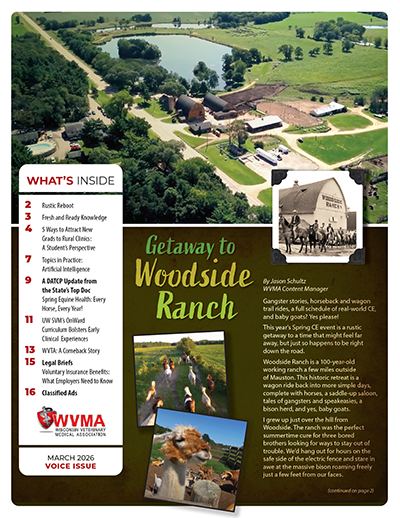
Getaway for the day with the WVMA at Woodside Ranch: a 100-year-old working ranch that feels like a long time ago, but just so happens to be right down the road.
Baby Goats? Yes Please!
This historic easy-does-it retreat is a wagon ride back into simpler times, complete with horses, a saddle-up saloon, tales of gangsters and speakeasies, a bison herd, baby goats, and more.
Easy-Does-It CE
Breathe in the open air of a thousand scenic acres under western-ish skies. Oh, and while you’re there, get the real-world, practice-ready CE you can put to work right away. And get connected to a whole herd of your fellow veterinarians.
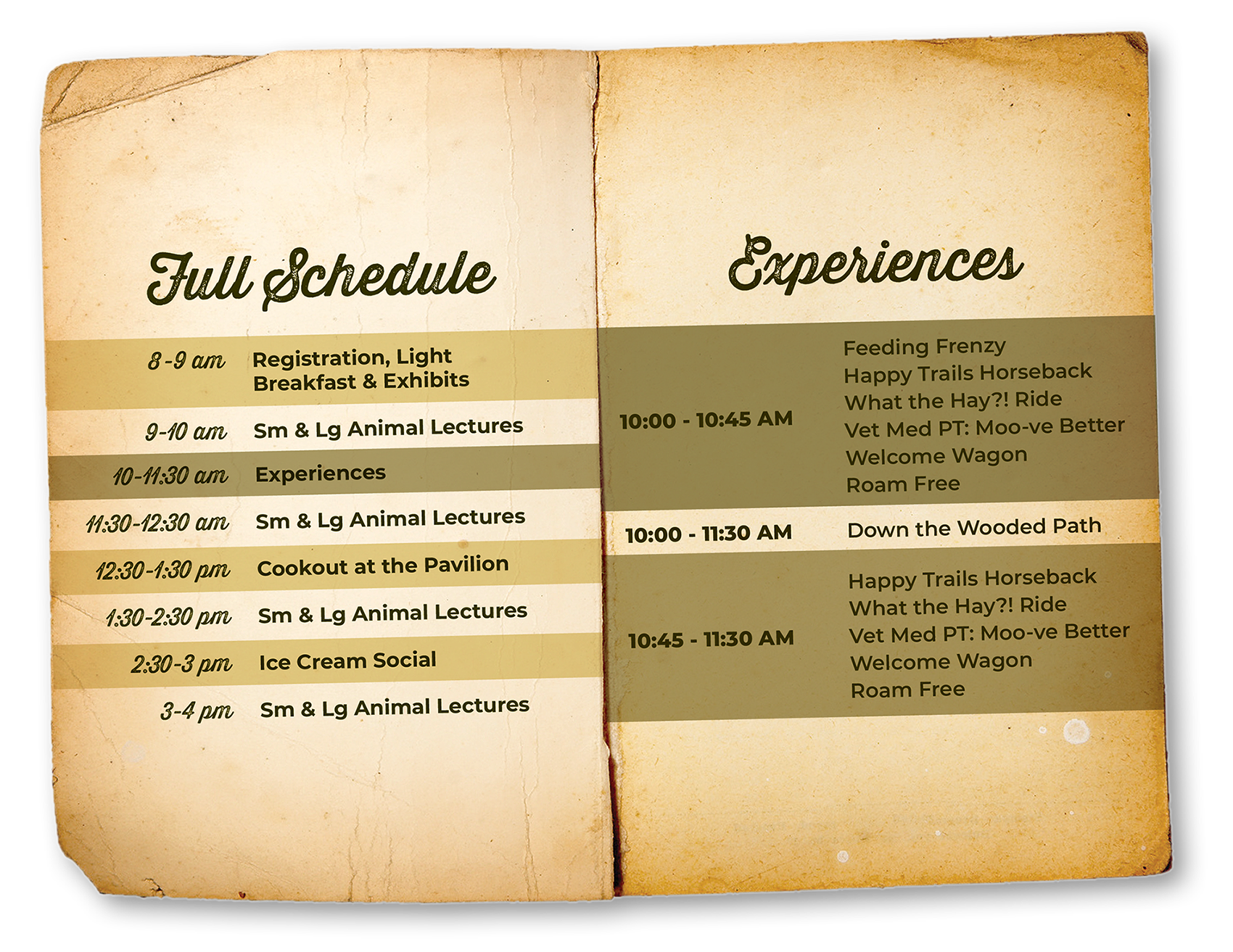
Pick from two interactive experiences and four of the eight lectures. (Experiences are first come, first serve, so the sooner you sign up, the more likely you’ll get the experiences you want.)
CE COURSES
On-point small- and large-animal lectures featuring veterinary specialists
and an agenda full of practice-ready CE you can put to work the next day.
You can pick the Small Animal or Large Animal track or bounce between the two.
SMALL ANIMAL TRACK
When Referral Isn’t an Option
9 – 10 a.m.
Neurology
The Neurology Workup Before Referral: Practical Screening Tests
1.2 scientific credits
Many cases referred to a veterinary neurologist begin as “mystery cases.” A patient may initially be described as “interesting” or “weird,” with vague or unusual signs that raise concern that it “might be neuro.” Often, these signs progress or worsen suddenly, prompting referral to a neurologist. For this reason, veterinary neurologists are trained to keep an open mind when evaluating patients. A key question in these cases is whether the patient truly has a primary neurological disorder, or whether disease affecting another body system is secondarily impacting the nervous system.
This lecture will review the screening process used to help avoid misdiagnosis and unnecessary advanced diagnostics, such as MRI or cerebrospinal fluid analysis. We’ll discuss accessible diagnostic testing, including general blood work, hormonal testing, and selected serum antibody or antigen titers. Through case-based examples, we’ll explore conditions that commonly mimic neurological disease, including metabolic derangements, myasthenia gravis, regional infectious diseases, and orthopedic conditions frequently referred to neurology.
Joy Delamaide Gasper, DVM, DACVIM (Neurology), is a board-certified veterinary neurologist with advanced training in medical neurology and neurosurgery for dogs and cats. She earned her B.A. from Wellesley College in 2005 and her Doctor of Veterinary Medicine degree from Kansas State University in 2009. Dr. Delamaide completed a rotating internship at VCA Sacramento Veterinary Referral Center (2009–2010), followed by a specialty internship in neurology at Veterinary Specialty Hospital in San Diego (2010–2011). She then completed her residency in neurology and neurosurgery at the University of Wisconsin–Madison from 2011–2014. Following her residency, Dr. Delamaide practiced veterinary neurology at Veterinary Specialty Hospital in San Diego for five years before returning to Madison.
Her clinical work focuses on the diagnosis and treatment of neurological disorders in dogs and cats. She emphasizes thoughtful neurological examination and careful evaluation of the whole patient, recognizing the importance of balancing medical recommendations with each pet’s quality of life and the goals of their family. Dr. Delamaide has particular interests in the medical and surgical management of intervertebral disc disease, long-term seizure management, and immune-mediated inflammatory diseases of the nervous system. She takes an integrative approach to treatment, utilizing a range of medical therapies as well as complementary strategies when appropriate. Outside of work, Dr. Delamaide enjoys hiking, cycling, and yoga.
11:30 a.m. – 12:30 p.m.
Ophthalmology
Eye Can’t Believe It’s Not Better: Navigating the Nuances of Chronic Ocular Therapy
1.2 scientific credits
Managing immune-mediated ocular conditions in veterinary patients is rarely a “one-and-done” scenario. It’s a marathon that requires a delicate balance between controlling inflammation and maintaining the long-term health of the ocular surface and systemic well-being. This session reviews available anti-inflammatories and evaluates the role of secondary immunomodulatory agents. Strategies for identifying the “minimum effective dose” while preventing repeat flares will also be discussed.
Jessica McDonald, DVM, DACVO, is a board-certified veterinary ophthalmologist. She graduated from the University of Wisconsin-Madison with degrees in Animal Sciences and Genetics in 2009, and received her Doctor of Veterinary Medicine from the same institution in 2013. Dr. McDonald completed a small animal rotating internship at Purdue University before finishing a three-year comparative ophthalmology residency in Salt Lake City, attaining board certification from the American College of Veterinary Ophthalmologists (ACVO) in 2017. She has since practiced in Wisconsin and Minnesota. In her free time, she enjoys spending time with her two dogs, Huxley and Khola. Having managed Huxley’s own eye health—including cataract surgery—Dr. McDonald offers a perspective that spans both the clinical and patient-owner sides of the field.
1:30 – 2:30 p.m.
Internist PLE & PLN
PLEs and PLNs: Where has all the protein gone?
1.2 scientific credits
A practical review of hypoproteinemia, discussion of causes with focus on PLEs and PLNs, diagnostics, and treatment strategies.
Alicia Bangert, DVM, DACVIM, attended Kansas State University College of Veterinary Medicine and received her DVM degree in 2006. From there, she was a general practitioner for approximately 5 years before returning to academia to complete a residency. She completed an internal medicine residency at Oklahoma State University in 2014. Since that time, Dr. Bangert has worked at specialty hospitals in Kansas City and Colorado Springs before joining WVRC in November of 2025.
3 – 4 p.m.
Oral Oncology Drugs
Practical Approaches to Common Cancers in Dogs and Cats
1.2 scientific credits
General practitioners play a critical role in identifying cancer, initiating diagnostics, providing treatment options, and supporting patient quality of life. Through practical guidelines and clinical case discussions, this session aims to provide veterinarians with the realistic tools and confidence in managing oncology patients when referral is not an option.
This session will review cancer diagnosis and staging basics, safe handling of chemotherapy, and the use of commonly prescribed oral chemotherapy medications. Practical diagnostic and treatment strategies will be discussed for the most common cancers encountered, including lymphoma, mast cell tumors, soft tissue sarcomas, mammary tumors, hemangiosarcoma, osteosarcoma, and oral tumors. Palliative care strategies will be covered, including approaches to pain management, gastrointestinal support, incontinence, and mobility concerns.
Breann Sommer, DVM, MS, DACVIM (Oncology), is a board-certified veterinary oncologist practicing at Animal Center for Emergency and Specialty in Madison. A 2015 graduate of the University of Wisconsin–Madison, she completed a small animal internship at Louisiana State University, followed by a residency and master’s degree in medical oncology at Purdue University. Understanding the emotional challenges that come with a pet’s cancer diagnosis and treatment, she strives to help families navigate their pet’s cancer journey with empathy and understanding.
LARGE ANIMAL TRACK
Companion Livestock: “Hey, Doc. While You’re Here…”
9 – 10 a.m.
Camelid & Small Ruminant Parasitology & Abortions
The Monsters Within: Parasites Affecting Camelid and Small Ruminants
1.2 scientific credits
This presentation will focus on internal parasites and could also address anemia in these species.
Ryan Breuer DVM, DACVIM- LAIM, Diagnostic Case and Outreach Coordinator (WVDL) & Clinical Assistant Professor of Large Animal Internal Medicine (UW-SVM), holds a dual appointment at the University of Wisconsin-Madison: He’s a Clinical Assistant Professor of Large Animal Internal Medicine at the UW School of Veterinary Medicine (UW-SVM) and a Diagnostic Case & Outreach Coordinator at the Wisconsin Veterinary Diagnostic Laboratory (WVDL). As part of his commitment to UW-SVM, Dr. Breuer is actively involved in the didactic, laboratory, and clinical instruction of veterinary students in large animal internal medicine and food animal production medicine (FAPM). His teaching interests are in clinical large animal internal medicine, small ruminant medicine, concepts of AVMA-approved humane euthanasia for large animal species, herd health investigations, and diagnostic/infectious disease consultation.
11:30 a.m. – 12:30 p.m.
Small Ruminant Urinary Obstruction
The Stone Dilemma: Managing Obstructive Urolithiasis in Small Ruminants
1.2 scientific credits
Obstructive urolithiasis is a frequent and frustrating emergency for the general practitioner, often carrying a guarded prognosis if not managed with precision. This session moves beyond the “emergency fix” to provide a comprehensive, field-ready roadmap for managing the blocked sheep or goat, starting with rapid stabilization and triage of the azotemic patient. We will dive into the practicalities of surgical interventions, comparing the long-term outcomes of tube cystostomy versus perineal urethrostomy. Finally, we will pivot to the most critical aspect for your clients: preventative nutrition. You will leave equipped to design specific dietary protocols that prevent recurrence and add value to your consultations.
Sabrina H. Brounts, DVM, MS, PhD, received her DVM degree from the University of Utrecht in the Netherlands. She then completed a residency and master’s degree in Large Animal Surgery at Purdue University, followed by a PhD degree at the University of Wisconsin-Madison. She became a Diplomate of the American College of Veterinary Surgeons (ACVS) as well as the European College of Veterinary Surgeons (ECVS). Due to her interests in the clinic as well as in research in sports medicine, she pursued another certification in equine sports medicine and became a Diplomate of the American College of Veterinary Sports Medicine and Rehabilitation (ACVSMR). Her research interests include soft tissue surgery (equine and ruminant) and sports medicine of the equine athlete (such as lameness and ligament/tendon healing). She has presented her research at national and international meetings as well as received multiple prestigious grants for her research.
1:30 – 2:30 p.m.
Small Ruminant Fracture Management
Casts, Splints, and Common Sense: Ruminant Fracture Management in General Practice
1.2 scientific credits
Don’t let a dangling limb derail your day. In ruminant medicine, a fractured limb doesn’t have to mean a terminal prognosis, even when a referral to a surgical suite is off the table. In this session, we will provide a field-ready guide to orthopedic techniques that any practitioner can master. We will move beyond basic bandaging to master the application of casting, bandage casting and farm-proof hybrid casting. We will be focusing on the unique healing potential of the young ruminant and provide you with the exact “red flag” checklists your clients need for successful home care. You’ll leave this session with a clear protocol for determining when to repair, when to salvage, and how to give your patients a “leg up” on recovery without breaking the client’s bank.
Sabrina H. Brounts, DVM, MS, PhD, received her DVM degree from the University of Utrecht in the Netherlands. She then completed a residency and master’s degree in Large Animal Surgery at Purdue University, followed by a PhD degree at the University of Wisconsin-Madison. She became a Diplomate of the American College of Veterinary Surgeons (ACVS) as well as the European College of Veterinary Surgeons (ECVS). Due to her interests in the clinic as well as in research in sports medicine, she pursued another certification in equine sports medicine and became a Diplomate of the American College of Veterinary Sports Medicine and Rehabilitation (ACVSMR). Her research interests include soft tissue surgery (equine and ruminant) and sports medicine of the equine athlete (such as lameness and ligament/tendon healing). She has presented her research at national and international meetings as well as received multiple prestigious grants for her research.
3 – 4 p.m.
Companion Livestock Anesthesia & Analgesia
When the Barnyard Won’t Behave: Sedation Tips for Companion Livestock
1.2 scientific credits
Get a practical overview of current sedation strategies for backyard livestock, including pigs, small ruminants, camelids, and birds commonly encountered as companion or hobby animals. Emphasis placed on safe, low-stress handling and appropriate selection of sedative and analgesic protocols tailored to species differences, temperament, and procedural needs. Highlights include unique considerations with these animals, common risks encountered in field settings, and techniques to minimize stress, injury, and physiologic complications. Practical case examples and evidence-based recommendations provided to support veterinary personnel in delivering effective, humane sedation while ensuring both animal welfare and human safety.
Becky Johnson, DVM, MS, PhD, DACVAA, obtained her DVM degree from the Ohio State University in 1993, completed a residency and MS degree at the University of Wisconsin, and became board-certified in Veterinary Anesthesiology and Pain Management in 1997. In 2002, she completed a PhD in Respiratory Neurophysiology. She’s currently the Research Anesthesiologist and a Clinical Professor of Anesthesia and Pain Management at the University of Wisconsin’s School of Veterinary Medicine. Her interests include: Advances in anesthetic and analgesic techniques of laboratory animal species and the effects of opioid and non-opioid analgesics on the gastrointestinal and respiratory systems of companion animals.
EATS
Light Breakfast
No need to start the day hungry. Pastries, yogurt, fruit, and coffee will be available after you register to make sure you’re ranch-ready.
Lunch
The grills will be fired up at the Woodside Cookout at the Pavilion, because when you’re on the ranch, you should eat lunch like a rancher. Brats, burgers, baked beans, and more, mmm. (If you’re in the mood for local eats, treat yourself to a bison burger.)
Snacks & Ice Cream
Coffee, water, and snacks will be available all day to keep you fed and focused. You like ice cream? So do we. We’ll meet at the Roundup Room in the afternoon to get your favorite flavor scooped by your favorite board member.
EXPERIENCES
Rustic Reboot offers seven invigorating experiences all designed to soothe the soul, recharge the batteries, and reconnect you to what matters most. Register early to rank the experiences in order of preference for a better chance of getting your first choice(s).


If you just feel like walking around and taking your sweet time, that’s ok too. It’s a reboot and you’ve earned the right to roam. Visit the animals, breathe in the nature, step on down to the mini lake and watch the fish jump, or just sit a spell. The only rule at Woodside is relax.
LOCATION
A thousand-acre “Thank You!” to our amazing partners at Woodside Ranch
W4015 State Rd 82, Mauston, WI 53948
Parking and Entry
When you get there in the morning, look for the signs and the friendly faces pointing you in the right direction. Once you’re parked, cross under the road through the tunnel and head up to the Ranch House to register.
SPONSORS